Faisal Hills as an Investment: An Honest Look at What Drives Value

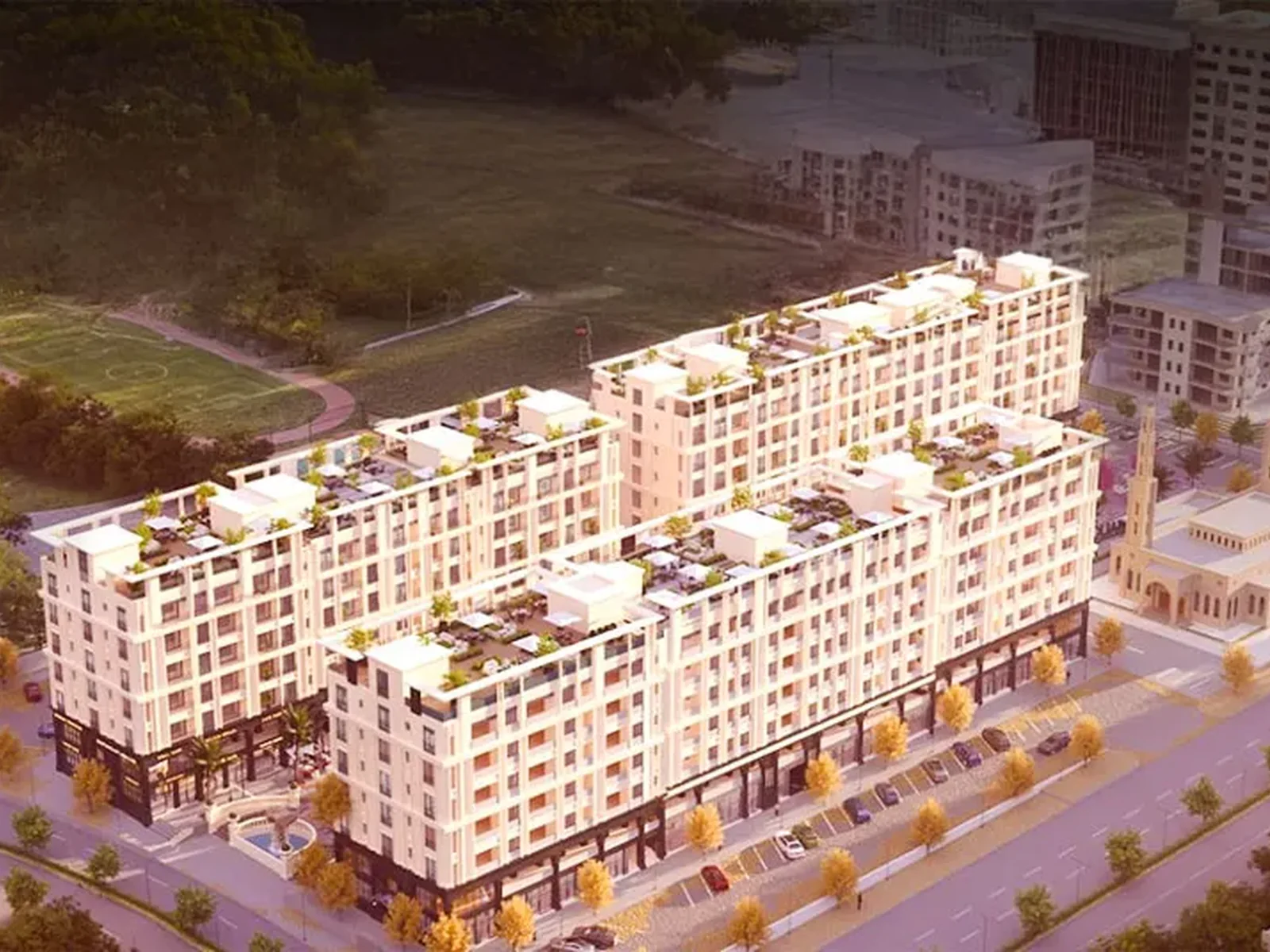
Property content in Pakistan is overwhelmingly promotional. Every society is "the best investment opportunity", every block is "expected to double". We sell in Faisal Hills, so weigh what follows accordingly — but we would rather set out the actual mechanics than add to the noise.
What genuinely drives value here
1. Approval status
The largest single factor, and it is binary. An RDA-approved society and an unapproved one are different asset classes, not different price points.
Faisal Hills holds an RDA NOC. That approval is why banks, buyers and builders treat it as a normal transaction rather than a gamble, and it underpins everything else about its pricing.
When you compare Faisal Hills against a cheaper unapproved scheme nearby, you are not comparing two similar products at different prices. You are comparing an asset with legal certainty against one without it.
2. Location and connectivity
Faisal Hills sits on the Main G.T. Road (N-5) at Taxila with M-1 Motorway access, roughly ten minutes from Taxila Cantt, adjacent to Multi Gardens B-17, and within reach of Wah Cantt and HITEC University.
This matters because connectivity determines who will actually live there. A society is worth what people will pay to live in it, and people live where they can get to work, school and hospital. Faisal Hills serves the Taxila–Wah–Islamabad corridor with genuine road access rather than an aspirational future link.
The Margalla Hills outlook is a real amenity that cannot be replicated by a competing scheme on flat ground.
3. Development progress — the block-level story
This is where generic analysis fails. "Faisal Hills prices" is not a meaningful concept, because blocks are at very different stages.
- The Executive Block is the most developed and populated, with roads complete and commercial activity. It commands the highest prices.
- Block D has possession handed over, with houses actively under construction.
- Block A has its 225-foot main boulevard complete.
- Blocks B and C are still maturing.
A less developed block trades at a discount because the buyer is absorbing development risk and waiting. As infrastructure completes, that discount narrows. That narrowing is where development-stage gains come from — and it is also the risk, because timelines slip.
Our block-by-block breakdown sets out the current status of each.
4. Supply
Societies release inventory over time. New blocks add supply, and supply affects price. A newly launched block usually enters below developed-block rates because it is earlier in the cycle.
The corollary is worth stating: a large society with substantial undeveloped land has more supply still to come. That is not a reason to avoid it, but it is a reason not to assume unlimited scarcity-driven appreciation.
Three ways people invest here
Buying a file to trade
Lowest entry cost and most liquid, but furthest from a usable asset. Returns depend on sentiment and the release cycle, and you are exposed to how easily you can find a buyer when you want out.
Buying a plot to hold
The most common approach. You own a defined asset in an approved society. It generates no income while you hold it, and you continue to carry any outstanding instalments. Suits people with a genuine multi-year horizon and no need for the capital.
Buying a plot and building
Converts land into something that can be lived in or rented. Requires more capital and involvement, but it is the only route producing utility or income rather than purely waiting for appreciation.
The comparison people rarely make explicitly: capital committed to a second plot produces nothing until sold, whereas the same capital spent building on a plot you already own produces a house. Both are defensible — they are just different decisions.
What we would tell a friend
Check the NOC yourself. Not the brochure. The authority.
Buy the block, not the society. The block determines your development risk, when you can build, and your realistic exit.
Match the horizon to the money. Property is illiquid. If you might need the capital in eighteen months, this is the wrong place for it.
Be sceptical of return projections, including ours. Nobody knows what prices do next. Anyone quoting a guaranteed percentage is selling.
Consider whether building beats buying more land. A built house has utility, rental potential and a broader buyer pool.
Account for the whole cost. Transfer fees, development charges, and the opportunity cost of capital sitting idle.
The honest summary
Faisal Hills has real fundamentals: RDA approval, a genuine location on a national highway with motorway access, visible development progress, an established developer with completed projects behind it, and a functioning resident community rather than only plot files.
It is not a guaranteed return, and the outcome depends heavily on which block you buy, at what price, and how long you can hold.
Tell us your budget, your horizon, and whether you intend to build, and we will tell you which blocks actually fit — including when the honest answer is that now is not your moment.
Frequently Asked Questions
Is Faisal Hills a good investment?+
It has genuine fundamentals — an RDA-approved NOC, a location on the Main G.T. Road with M-1 Motorway access, visible development progress and an established developer with completed projects. Whether it suits you depends on which block you buy, your entry price and your holding period. No one can honestly guarantee appreciation, and you should be sceptical of anyone quoting a guaranteed return.
Which Faisal Hills block is best for investment?+
It depends on risk appetite. The Executive Block and Block D are the most developed, carry the lowest development risk and command the highest prices. Blocks B and C trade at a discount because buyers absorb development risk and wait for infrastructure. That discount narrowing as development completes is where development-stage gains come from, along with the corresponding risk that timelines slip.
Should I buy another plot or build on the one I have?+
A second plot produces nothing until you sell it, while building converts land into an asset you can live in or rent. Building requires more capital and involvement but generates utility or income and widens the pool of buyers at resale. Neither is automatically correct — the point is to make the comparison deliberately rather than defaulting to buying more land.
Why do prices differ so much between blocks in the same society?+
Because development status differs sharply. A block with completed roads, live utilities and handed-over possession lets you build immediately and is priced accordingly. A block still under development trades cheaper because the buyer absorbs the risk and the waiting time. Quoting a single price for a whole society is meaningless for this reason.